Find the underlying cause
Trace recurring problems back to the rules, handoffs and information that produce them. Check the explanation against real cases before deciding what to change.
02 / 04 · Process optimization
Delays, rework and recurring complaints often point to a deeper problem. We find what is causing them, improve how the work runs and help your team put the changes into practice.
Keep the source document beside the expense details.
For work that repeatedly slows down, goes wrong or comes back: delayed approvals, repeated data entry, unreliable reporting or recurring complaints.
Trace recurring problems back to the rules, handoffs and information that produce them. Check the explanation against real cases before deciding what to change.
Simplify requests and approvals, give each step an owner and make exceptions visible. Address the gaps that leave customers waiting and teams repeating work.
Improve the workflow first, then connect tools or automate repeatable tasks where it helps. Digital transformation can include new systems when the business needs them.
Support staff training, manager coaching and rollout communications where needed. Follow adoption and agreed measures to see whether the change addresses the original problem.
We work with businesses across industries and bring direct experience in the sectors below. We follow how the work actually gets done, verify what reports miss and act on the findings, even when they’re uncomfortable.
When approvals stall or teams redo the same work, we find where the process breaks and help put a clearer way of working in place.
When a supplier’s work or charges don’t match the agreement, we compare what was promised, what was delivered and what was billed, then identify what needs correcting.
Compare what was quoted, approved and billed. Pinpoint discrepancies before the next payment.
Track scope changes from field approval to invoicing so extra work doesn't get lost.
Check management and maintenance charges against agreed work, approvals and completion records.
Route tenant requests to the right team and follow them through to resolution, even when a contractor takes over.
Trace booking changes, supplier fees and cancellations against confirmations to see which costs are justified.
Connect enquiries, quotes and booking details so changes and special requests aren’t lost at handoff.
Improve how your stores serve clients and how your buying team manages stock, suppliers and margins.
Keep orders, deliveries and payments aligned when retailers change quantities, dates or requirements.
Check that contracted visits and inspections actually happened, and make sure missed work has an owner and a follow-up date.
Connect work orders, on-site checks and completion records so managers can see which jobs still need attention.
If your bills don’t match what you agreed to, or a service problem keeps coming back, we review your account, charges and service history to identify what needs correcting.
We help find where things break between the offer, activation, billing and support, then work with the teams responsible to fix the process.
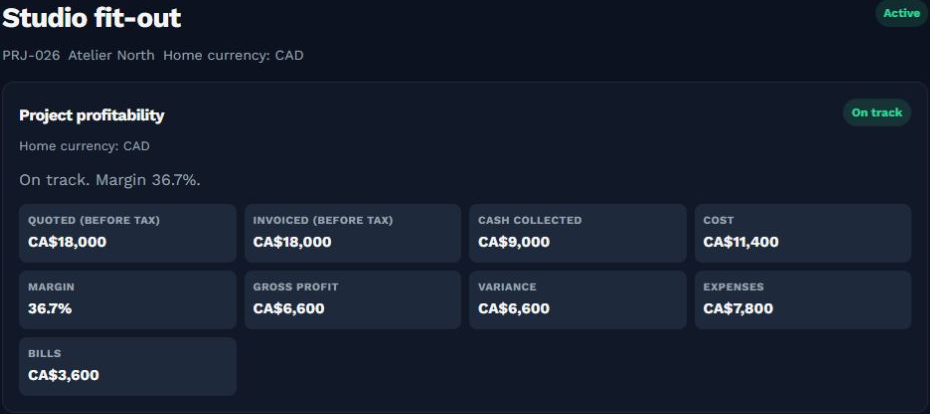
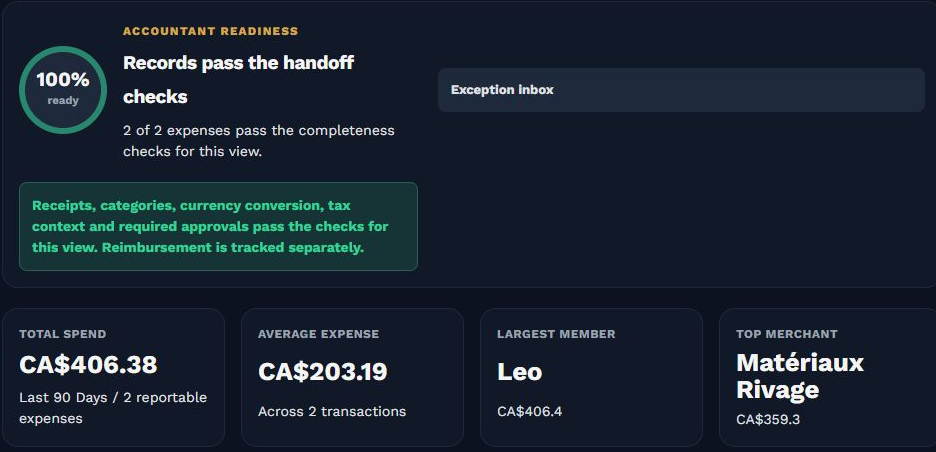
Nomad Finance, our own product, shows one part of process optimization in practice: keeping related records connected as work moves from quoting to billing and payment.
Read the Nomad Finance case studyAfter issuing and recording costs
 Nomad
Interactive illustration · sample records · Simplified example · before tax
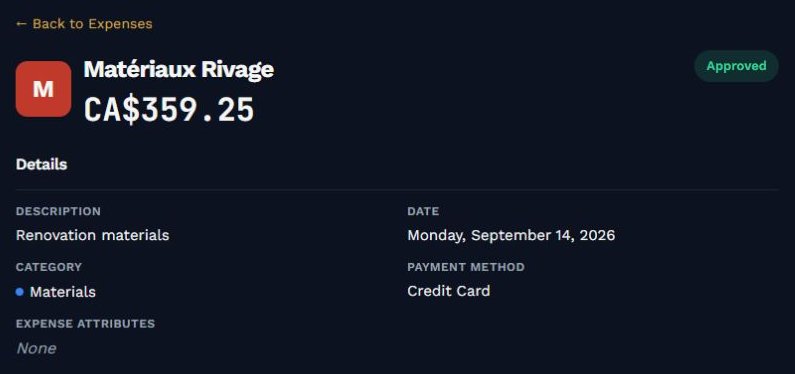
In Nomad Finance, our own product, users can process receipts in bulk and create expenses from selected emails. The source document remains available for review.
Keep the source document beside the expense details.
See the merchant, date, amount and category in one place.
Review the details against the receipt before approving.
AI receptionist
Follow one after-hours call, from the first ring to the message your team receives.
01 · The call
“Hi, I’d like a quote for a kitchen renovation.”
02 · The details
“Where is the project, and when is the best time to call you back?”
03 · The request
“Thanks, Maya. Someone from the team will call you after 4 pm.”
04 · What you get
One message with what you need to call back. The full transcript stays with the conversation.
Your team receives a call summary: callback request from Maya Chen, 514-555-0186, normal priority. Wants a quote for a kitchen renovation in Longueuil. Best reached after 4 pm.
The caller gets an answer without interrupting the team.
The caller agrees. The appointment goes into the calendar.
The team receives the issue and invoice reference for the callback.
Caller · After hours
“I’d like a quote for a kitchen renovation.”
AI receptionist · Request qualified
“Where’s the project, and when can we reach you?”
To estimating · Next step
Maya’s request is ready with a callback window.
Estimate intake
Ready for estimating
Caller · Routine question
“Do you take consultations on Saturdays?”
AI receptionist · Approved information
“Consultations are Monday to Friday, eight to five.”
Answered · Next step
The caller gets an answer without interrupting the team.
Call resolved
No callback needed
Caller · Booking request
“Can I book a site visit on Thursday morning?”
AI receptionist · Availability checked
“Thursday at ten is open. Does that work?”
Calendar · Next step
The caller agrees. The appointment goes into the calendar.
Site visit
Calendar · Confirmed
Caller · Exception raised
“I need to talk to someone about a charge.”
AI receptionist · Callback fallback
“Billing is unavailable. I can pass them a message.”
To billing · Next step
The team receives the issue and invoice reference for the callback.
Priority callback
Billing team · Ready to review
What would you like your receptionist to handle?
03
Your written quote confirms the scope, separate costs and what we need from you.
After launch: Your proposal sets out scope, price, responsibilities and follow-up. For technical work, it also covers access, hosting, monitoring, recurring costs and ownership.
04
No. If you have a specific process to improve, we can start there. Business strategy is useful when the decision spans several parts of the business or when priorities and investment choices are still unclear.
No. Clearer responsibilities, fewer steps or better use of current tools may solve the problem. We use automation for suitable recurring work, with review and exception handling where needed.
Yes. A process improvement can involve changes to systems and to the way people work. We can include staff training, manager coaching, rollout communications and adoption follow-up in the engagement.
We agree the measures before implementation: for example, waiting time, rework, error rates or repeat complaints. We compare results with the starting point and review how the team uses the changed process. The scope includes the agreed follow-up period.
Tell us where work gets stuck, what it affects and what you have already tried. We can define the process to examine and the improvement to pursue.
Discuss your operations